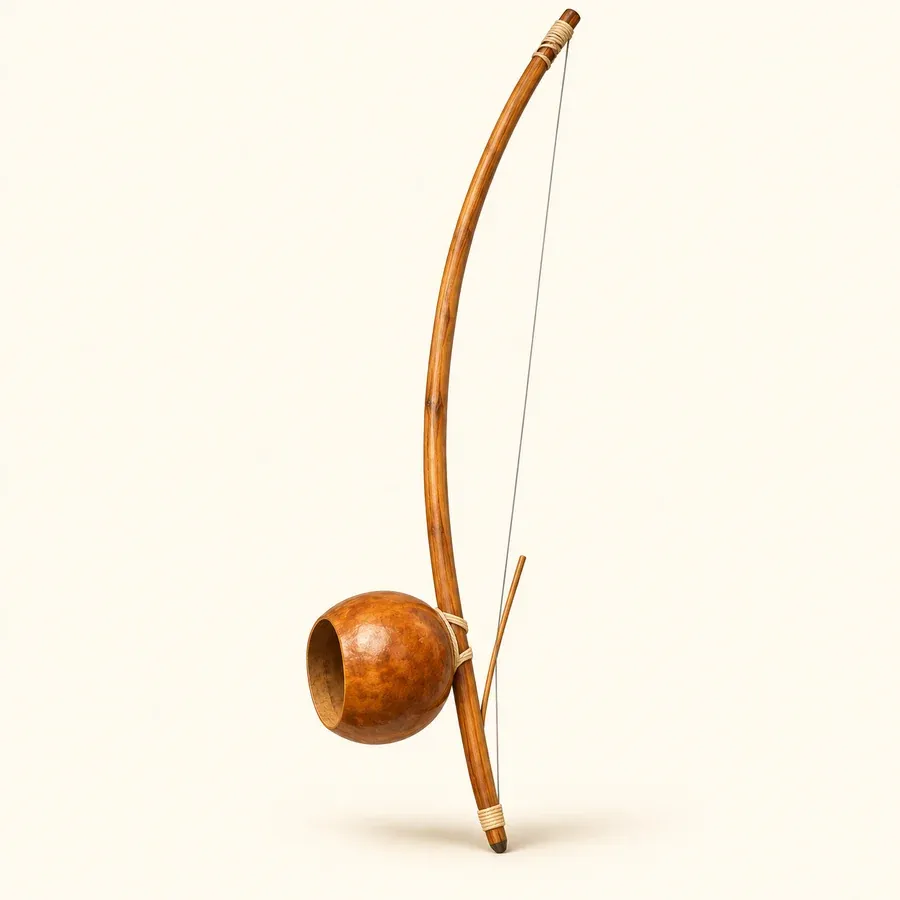
Berimbau
A one-string musical bow with a gourd as its resonator. In many traditions, it guides the rhythm and game.
 AKIN CAPOEIRA
DISCOVER CAPOEIRA
Capoeira is an Afro-Brazilian art form where movement, music, improvisation and interaction go hand in hand.
Read more ↓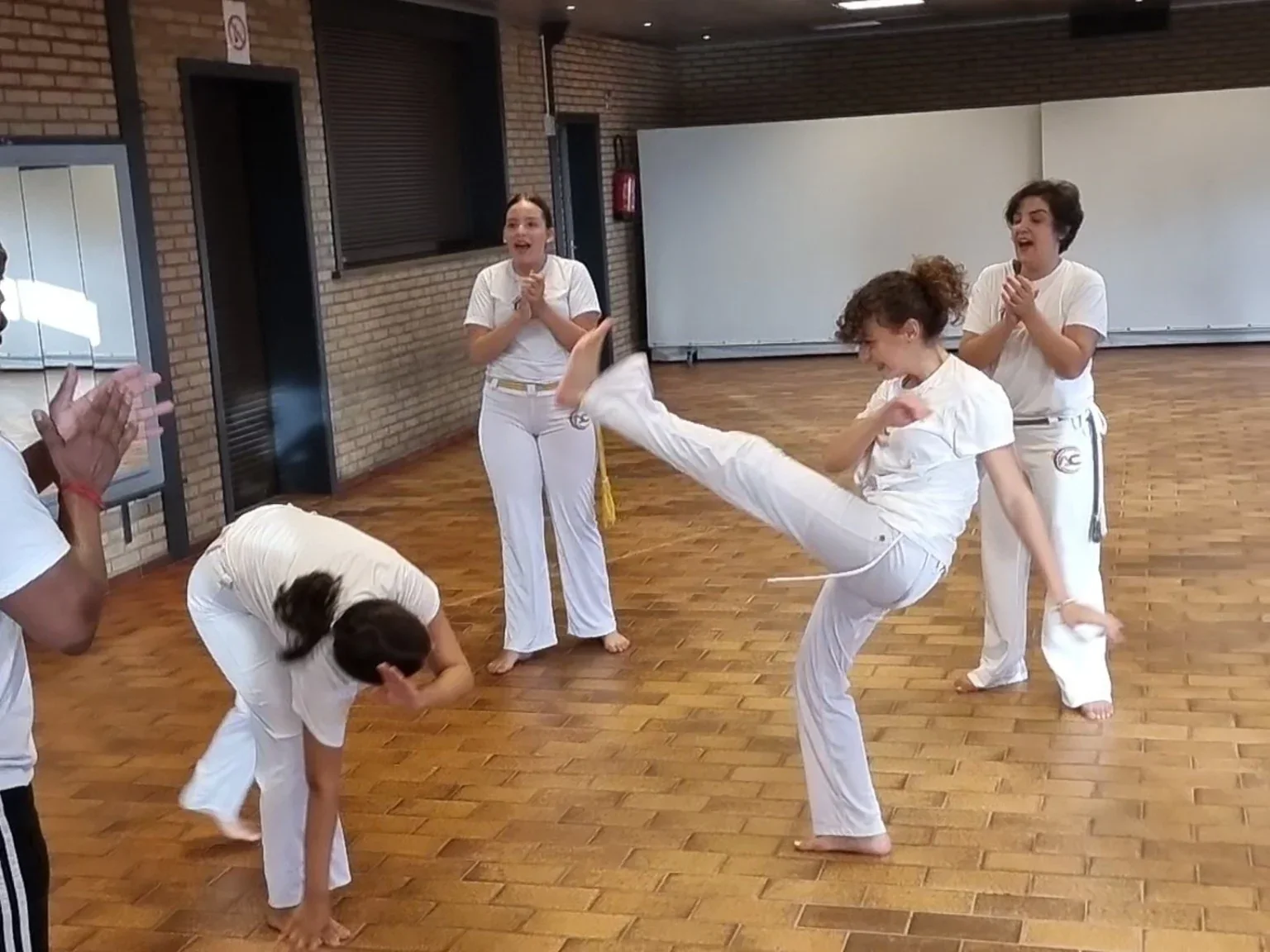
THE ROOTS
Capoeira emerged in Brazil among Afro-Brazilian communities. Its history is closely tied to the lives of enslaved Africans and their descendants, and the culture and communities they developed.
Across generations, capoeira took on different forms and meanings. Today it is practised worldwide, combining physical skill, rhythm, creativity and cultural transmission.
Capoeira is difficult to put into a single category: it includes aspects of martial art, game, dance and music, while being more than the sum of those parts.
THE HEART OF CAPOEIRA
The roda is the circle where capoeira comes alive. Participants sing, clap and accompany the game with instruments. Two players exchange moves, attacks, evasions and improvisation inside the circle.
The rhythm, singing and participation of the group influence how the game develops. The roda is not only about the two players: everyone contributes.
THE RHYTHM
Music plays an essential role in capoeira. Not every roda uses the same instruments, but some are especially characteristic.
A one-string musical bow with a gourd as its resonator. In many traditions, it guides the rhythm and game.
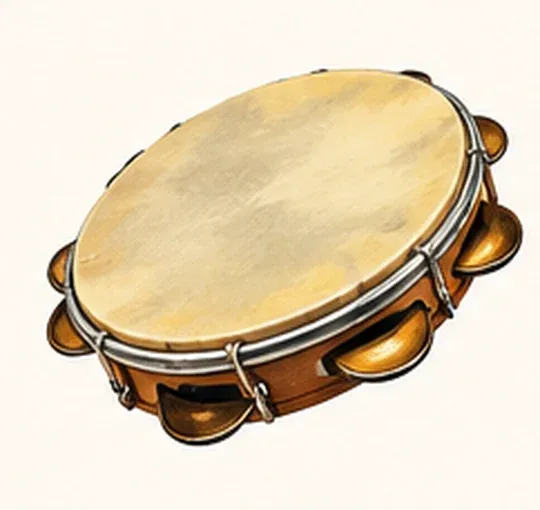
A Brazilian frame drum with jingles, played by hand.
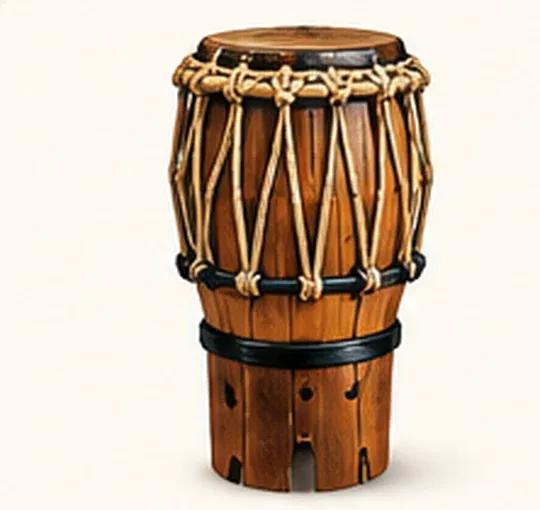
A tall hand drum that adds rhythmic power to the music.
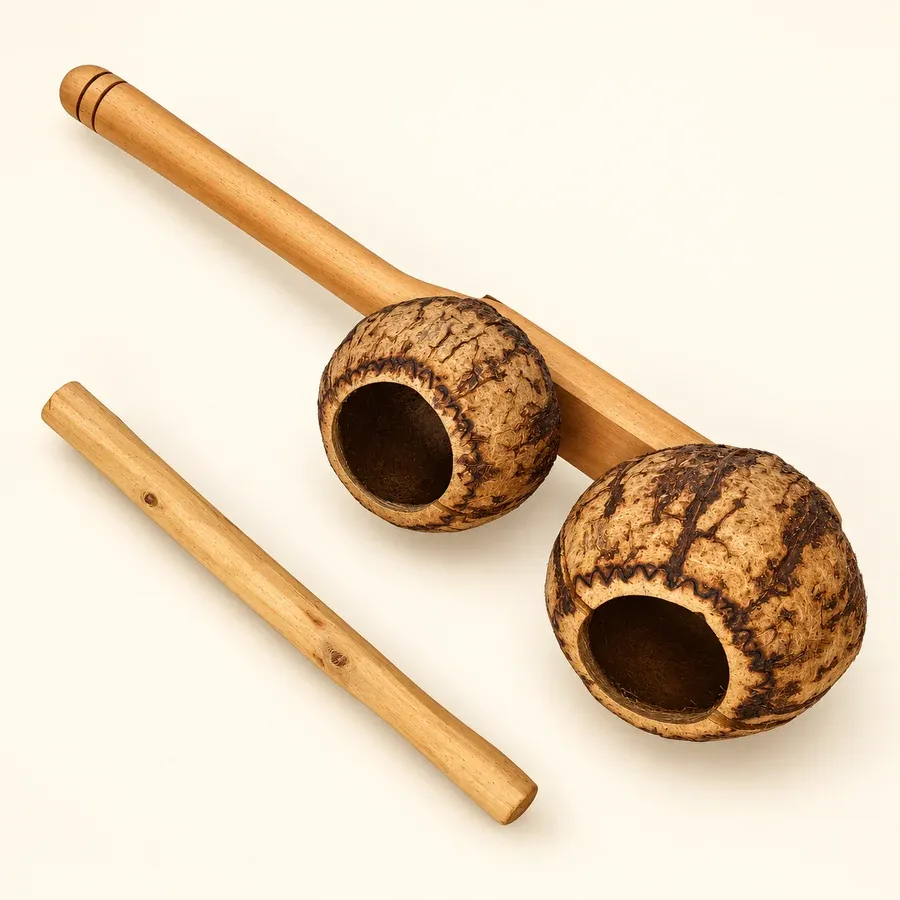
At Akin, the agogô is made from wood with two hollowed coconut shells. Striking them with a wooden stick produces two distinct tones.
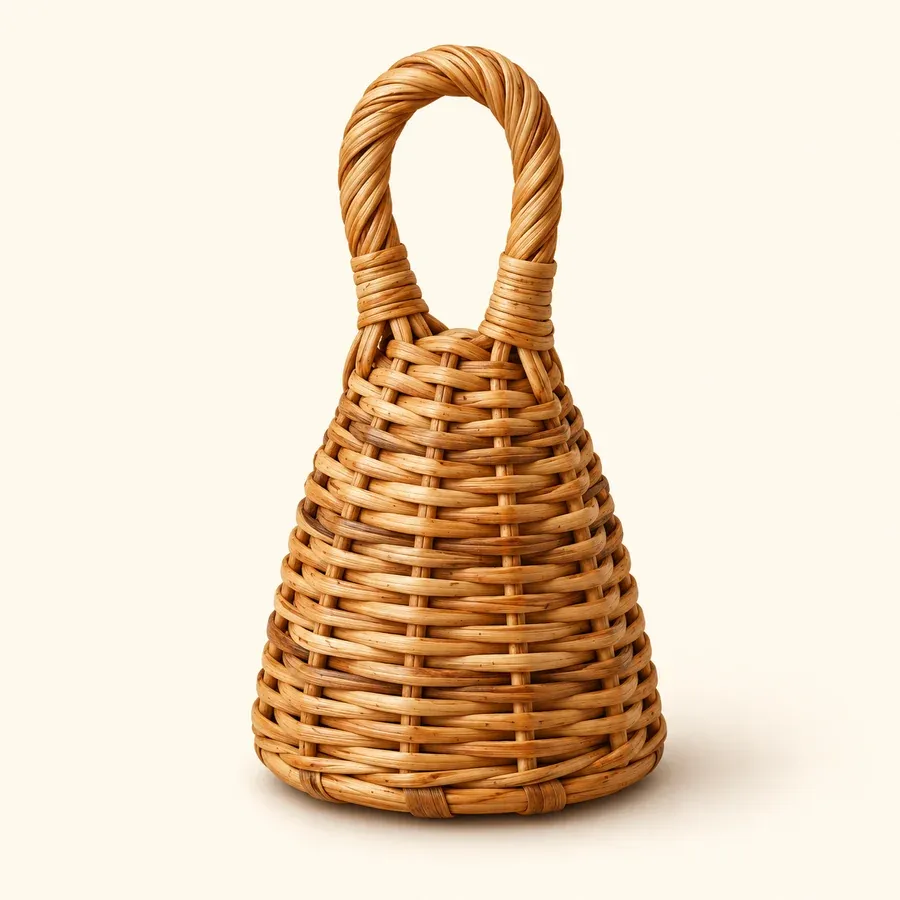
A small woven shaker filled with seeds or other grains. Often played alongside the berimbau, it adds a crisp rattling rhythm.
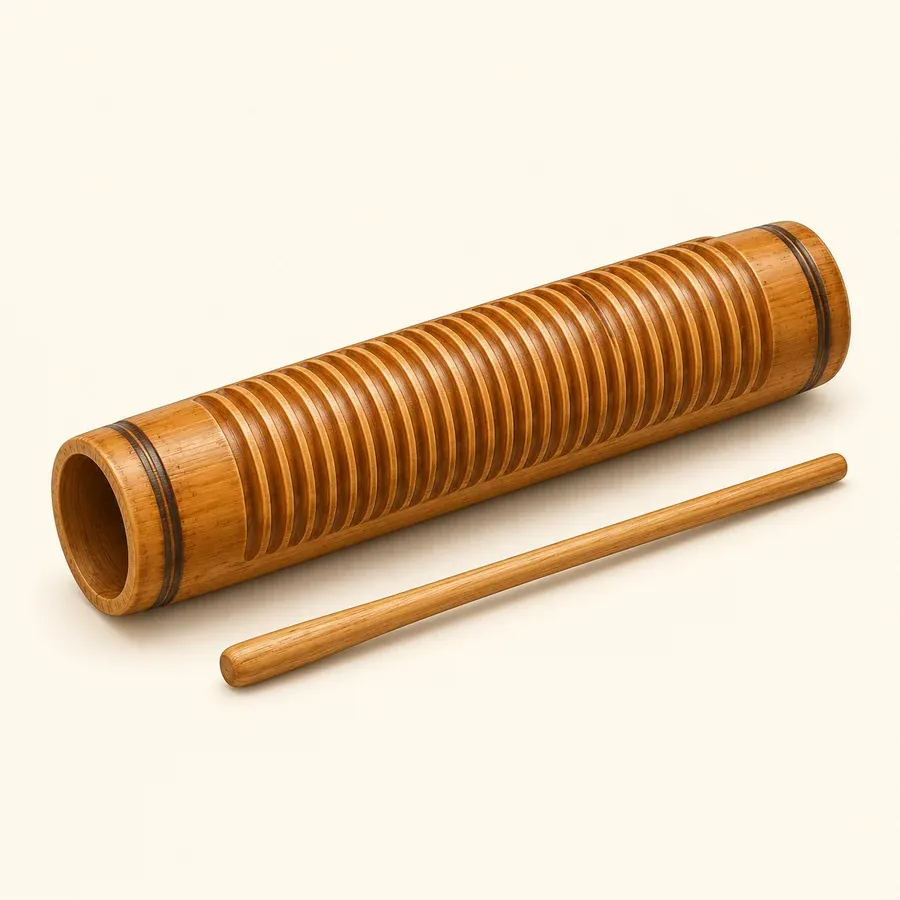
A ridged scraper, commonly made from bamboo or wood. A small stick is drawn across its grooves to create a rhythmic rasp.
Singing, call and response, and clapping are just as important as the instruments.
Explore the songs →MOVEMENT AND PLAY
The characteristic basic movement from which many capoeira moves develop.
Evasive movements that create space and new opportunities.
The game itself: responding, making choices and improvising to the rhythm.
LEARN AND GROW
At Akin Capoeira, musicality, respect, discipline and interplay in the roda also matter for development. See the graduation system from age 12.
DISCOVER IT FOR YOURSELF
Want to know when regular classes take place? See the timetable and two training locations.